Episode 2 · 14:24 video · 11 min read
What If Every Insect Vanished Tomorrow?
What would really happen if every insect on Earth vanished at once? Follow Tik and Byte from minute 1 to a million years later: waiting flowers, hungry nests, piling dung, pricey chocolate, the end of malaria and a windy, browner world.
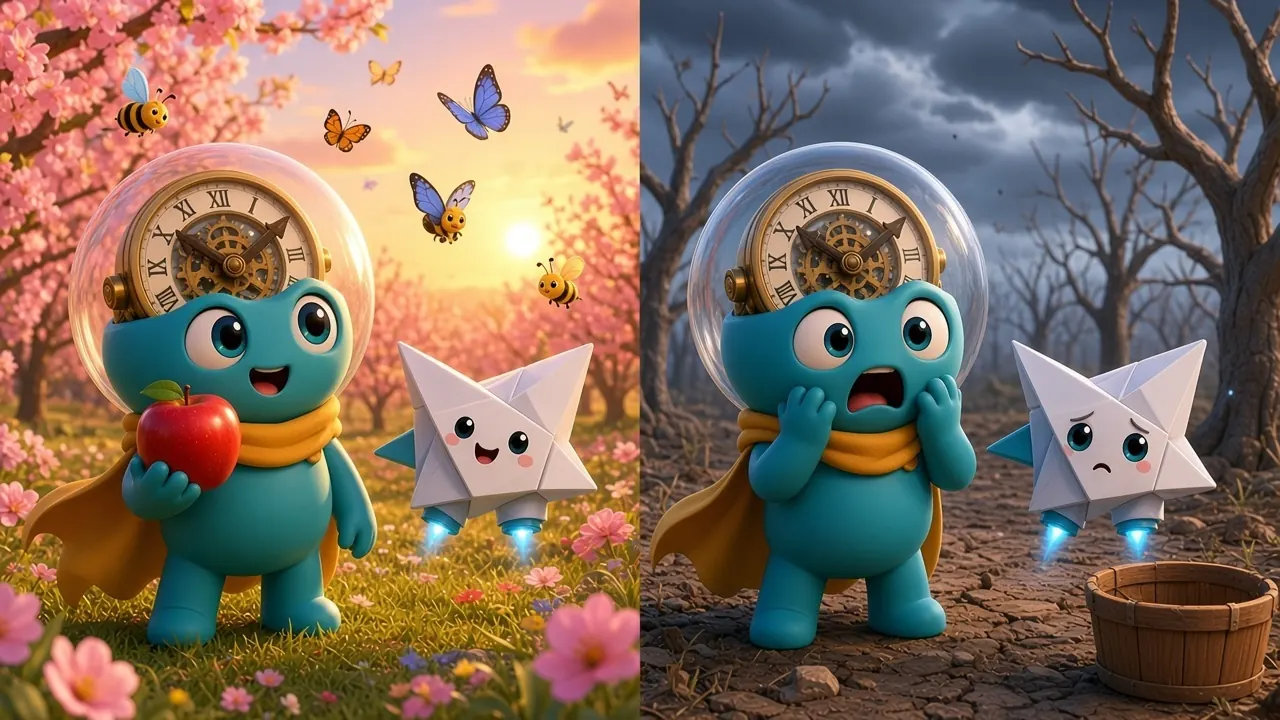
It's a warm summer evening. The porch light is on, moths are circling it like tiny planets, and a mosquito is whining right next to your ear. You swat. You miss. Classic.
Then, mid-buzz, there's silence. The mosquito is gone. So are the moths. So is every bee, beetle, butterfly, ant and fly on the planet.
That is the starting point for our second adventure with Tik and Byte. The rule is simple: if it's an insect, it vanishes, and it never comes back. Anything with six legs and a three-part body is gone. Spiders stay, and so do ticks, because they are arachnids. Worms stay. Crabs, shrimp and woodlice stay too, because they are crustaceans. None of them are insects.
And at first? You'd be thrilled. No mosquitoes, no wasps at your picnic and no cockroach in the kitchen at 2 a.m. So what actually happens next? Let's start the clock.
Minute 1: ten quintillion, gone
To understand how big this is, you need a really big number. At any moment, scientists estimate there are around ten quintillion insects alive. That's a one followed by nineteen zeros, or more than a billion insects for every person on Earth.
And we barely know them. Researchers think there could be around five and a half million insect species, and we've only named about one million. So in a single minute, we lost millions of species we never even met.
The first signs are small. Your car's windshield is spotless. The air above the pond is perfectly still. In the rainforest, the night chorus of crickets and cicadas switches off as if someone pulled a plug. The frogs keep calling for a while. They don't know yet.
The ocean barely notices. Insects hardly live in the sea, and crabs and shrimp are crustaceans, so they carry on as normal. The biologist E.O. Wilson once called insects "the little things that run the world." We're about to find out how right he was.
Hour 1: the flowers wait
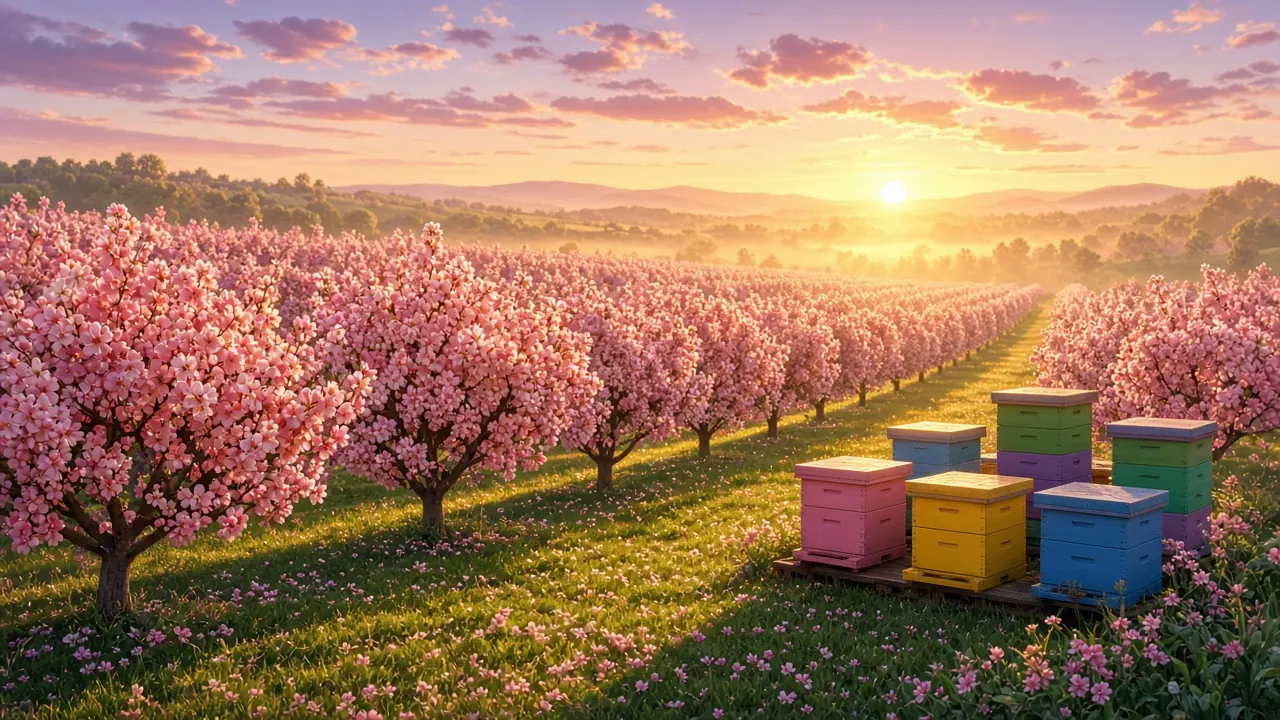
On the other side of the planet, the sun comes up. In orchards and meadows, billions of flowers open, offer their nectar and wait for a visitor. Nobody comes.
To make a fruit or a seed, most plants need pollen moved from one flower to another, and for most flowering plants, insects are the delivery service. Scientists estimate that around 87% of flowering plant species rely on animals to carry their pollen, and by far the biggest part of that workforce is insects.
Byte would like to volunteer. Byte bonks into a sunflower, gets covered in yellow pollen and sneezes himself backwards. Byte is not great at this.
Beekeepers open their hives and find honey and wax, but not one bee. Down on the ground, other jobs have stopped too. Ants normally carry seeds, hunt pests and dig tunnels. When an animal dies in a field, flies usually find it within minutes. Today nobody shows up. Most people still haven't noticed a thing. For the birds, though, the clock is already ticking.
Day 1: the hungry nests
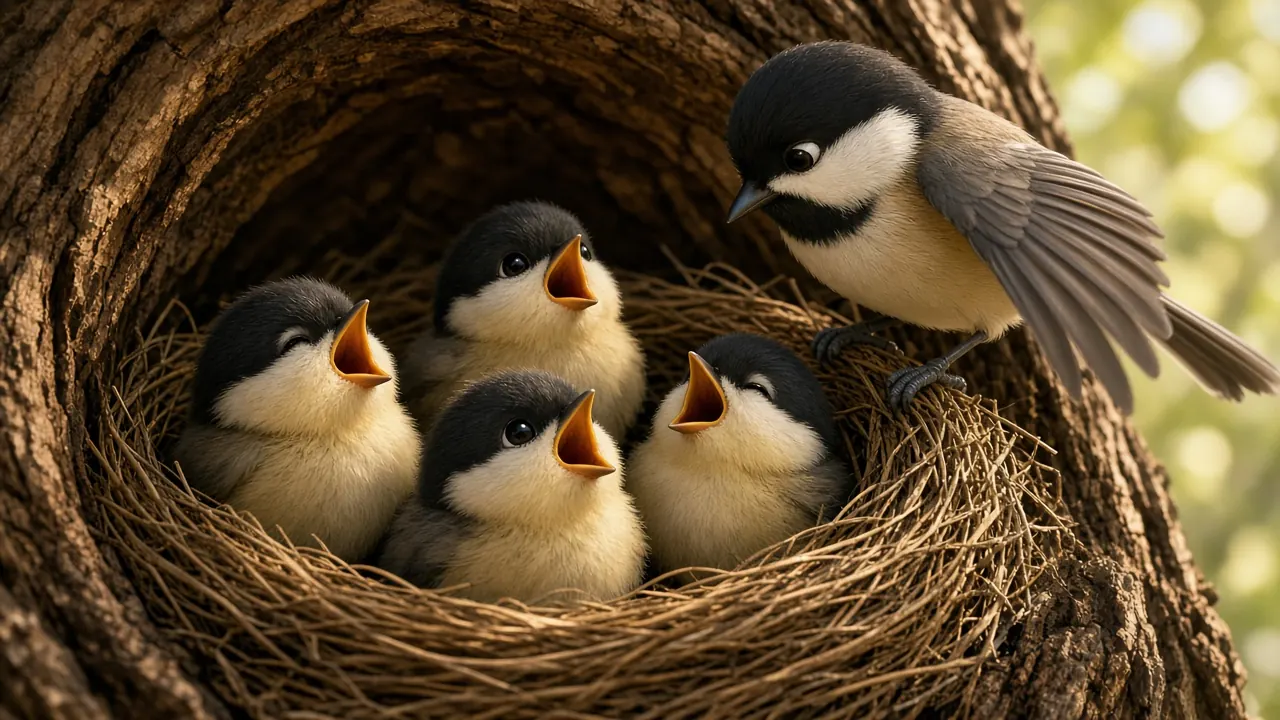
It's springtime in the north, and nests are full of very hungry chicks. Here's something most people don't know: even birds that eat seeds all winter switch to insects when they have babies. Insects are soft, packed with protein and easy to swallow. In North America, about 96% of land birds raise their young at least partly on insects.
And they need a lot of them. One pair of tiny chickadees needs 6,000 to 9,000 caterpillars to raise a single family. That works out to a caterpillar delivered about every three minutes, from dawn till dusk, for more than two weeks. Today the number is zero. Byte folds himself into a paper worm and offers his services. The chicks are not convinced.
Worldwide, insect-eating birds normally eat an estimated 400 million tonnes of insects and other creepy-crawlies every year. That whole buffet has just closed. Swallows and swifts, which catch every meal in mid-air, are flying through an empty sky. At sunset the bats wake up to the same problem: around seven out of ten bat species hunt insects, and tonight their sonar pings out into the dark and nothing pings back.
Week 1: the clean-up crew stops
Let's talk about a job nobody thinks about: cleaning up. Every day, farm animals drop mountains of dung. Normally dung beetles roll it, bury it and eat it, and fly larvae break down the rest.
We actually know what happens when that crew goes missing. When cattle were brought to Australia, the native dung beetles weren't used to cow dung, so the pats just sat there. They dried out, smothered the grass and bred clouds of flies. Between 1965 and 1985, the Australian Dung Beetle Project released 43 species of dung beetle, and 23 became established. Now picture the whole planet with no beetles at all.
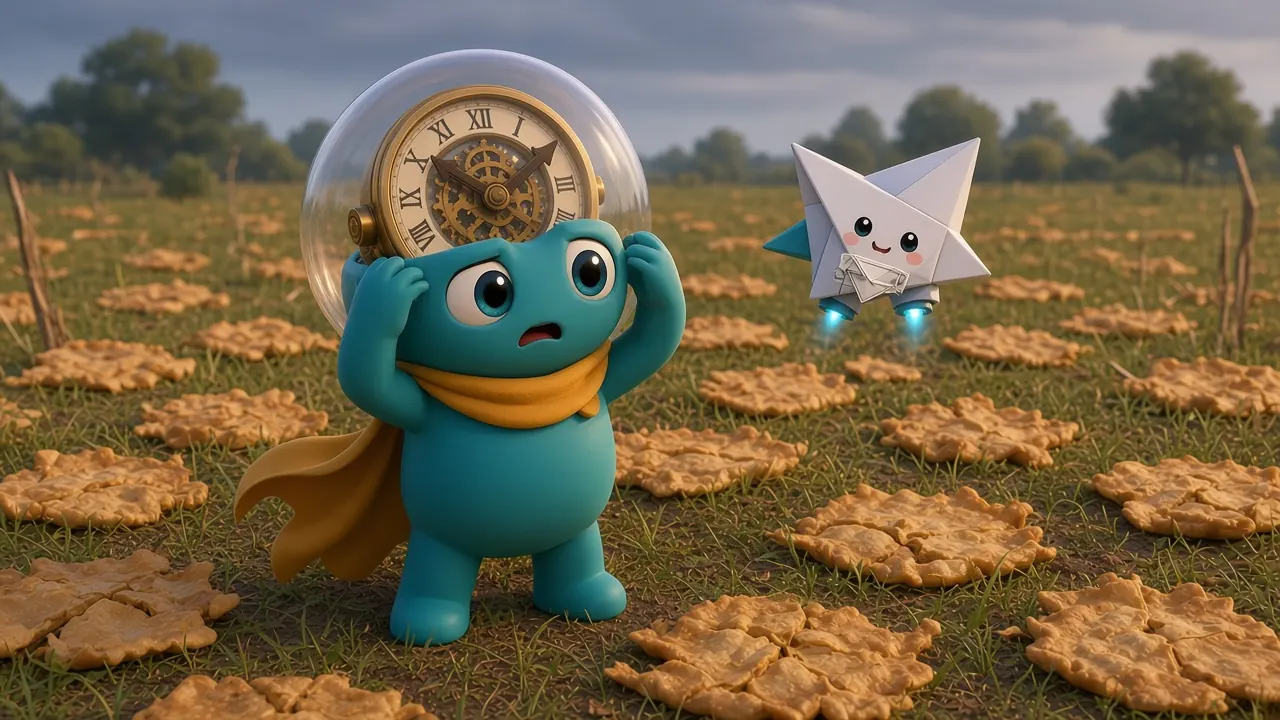
The pats harden into crusty pancakes that hang around for months and kill the grass underneath. Dead animals rot more slowly too. In experiments where insects are kept away, bodies take much longer to break down, and some simply dry out like mummies.
The job still gets done, though. Bacteria and fungi keep working, and so do earthworms, millipedes and woodlice, because none of them are insects. It's just slower, and a lot less pleasant to walk past.
The food web starts to unravel
In rivers and lakes, young trout and salmon feast on the larvae of mayflies, caddisflies and midges. Those are insects, so they're gone. Almost every adult frog eats insects, and so do lots of lizards, so all over the world tongues are shooting out at empty air. Even the spiders, who survived the vanishing, are in trouble: their webs stay empty.
Month 1: the Einstein myth and the great crop sort
You've probably heard this one: "If the bee disappeared, humans would only have four years left to live", attributed to Albert Einstein. There's no evidence Einstein ever said it. The earliest four-year version anyone has found appeared in a French magazine in 1965, ten years after he died. And it's also just wrong.
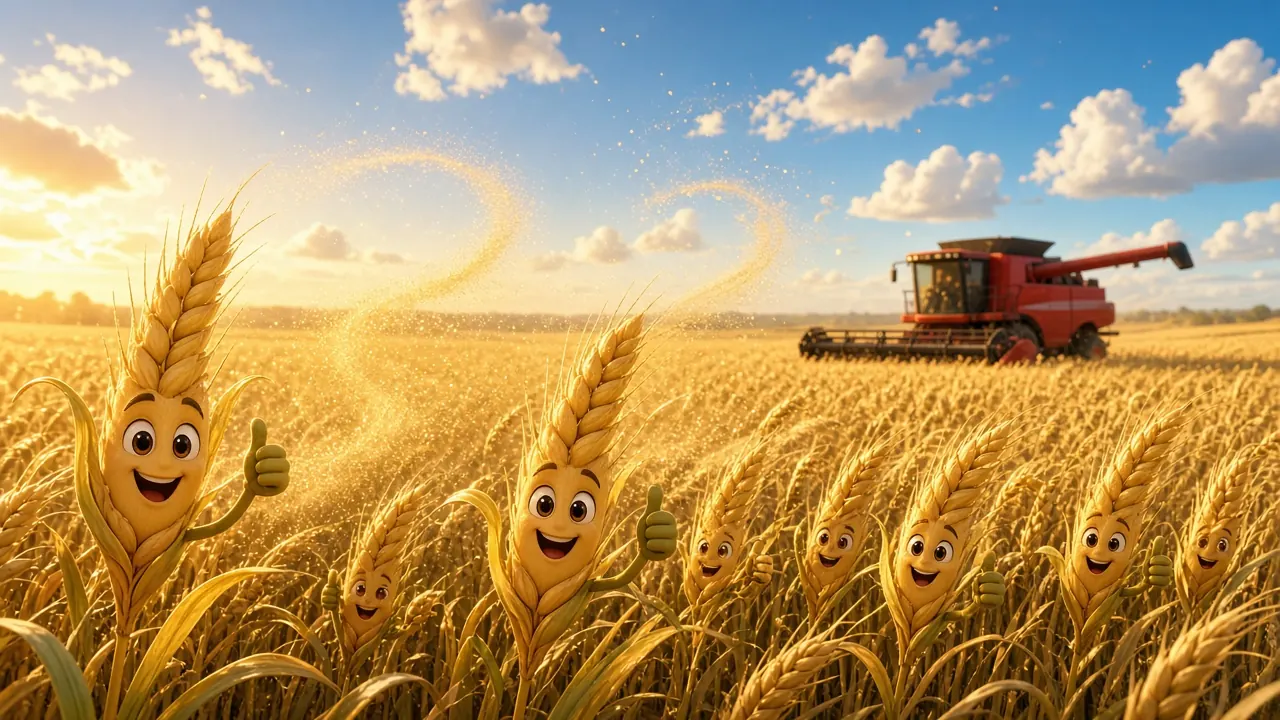
The most important crops on Earth don't need insects at all. Wheat, rice and corn are pollinated by the wind or pollinate themselves, and those three grains give humanity around half of all the calories we eat. The invisible thing that keeps most of us fed is the wind.
So let's sort the crops.
- Survivors: potatoes, cassava and sugarcane are grown from pieces of the plant. Bananas grow without pollination at all. Most grapes pollinate themselves, so wine survives. Arabica coffee mostly pollinates itself too, so harvests are smaller, but your morning cup lives.
- Dates: the wind does most of the work, and for thousands of years farmers in the Middle East have climbed palm trees to pollinate them by hand.
- In trouble: a major study found that about three out of four leading food crops do better with animal pollinators. Together, though, they make up only about a third of the world's food production. We keep the calories, but we lose the colour.
Almonds depend almost entirely on bees. California grows around 80% of the world's almonds and rents more than 2.5 million honeybee colonies every spring. This spring it rents none. Apples, cherries, blueberries, melons, pumpkins and watermelons crash.
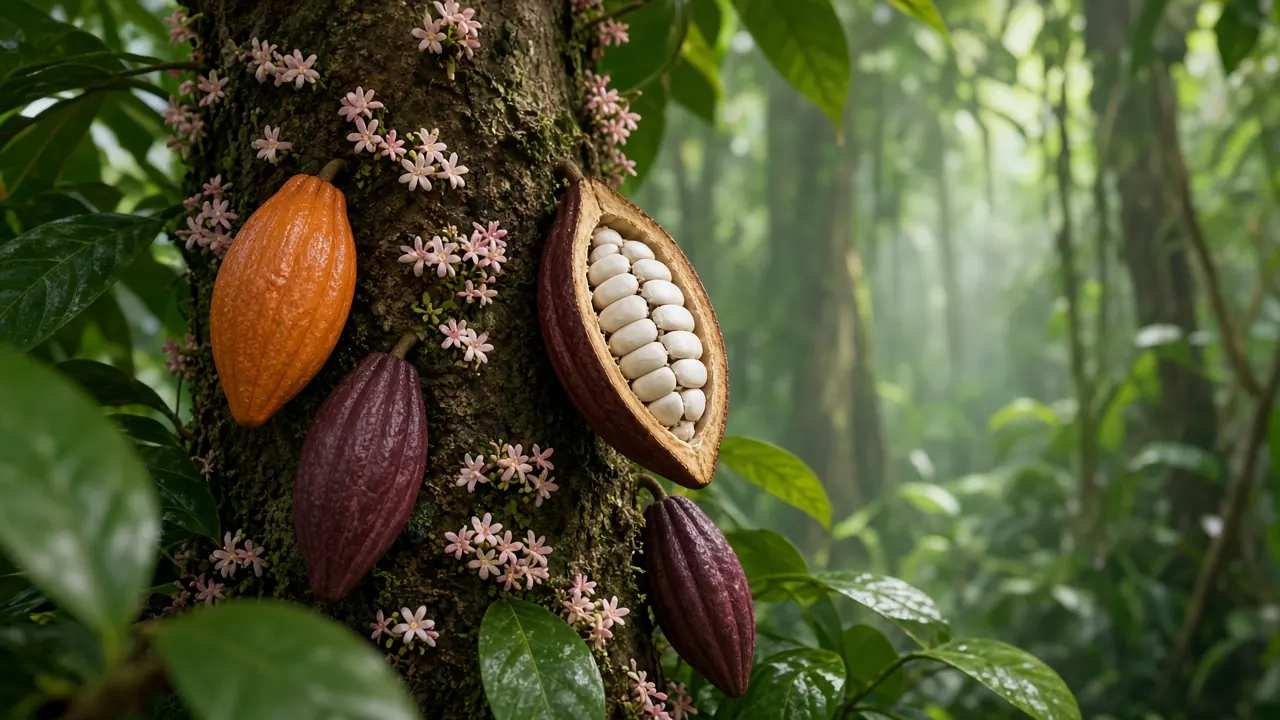
And chocolate? Cocoa flowers are pollinated mostly by tiny midges, flies smaller than a pinhead. Without them, cocoa harvests collapse.
The feather on a stick
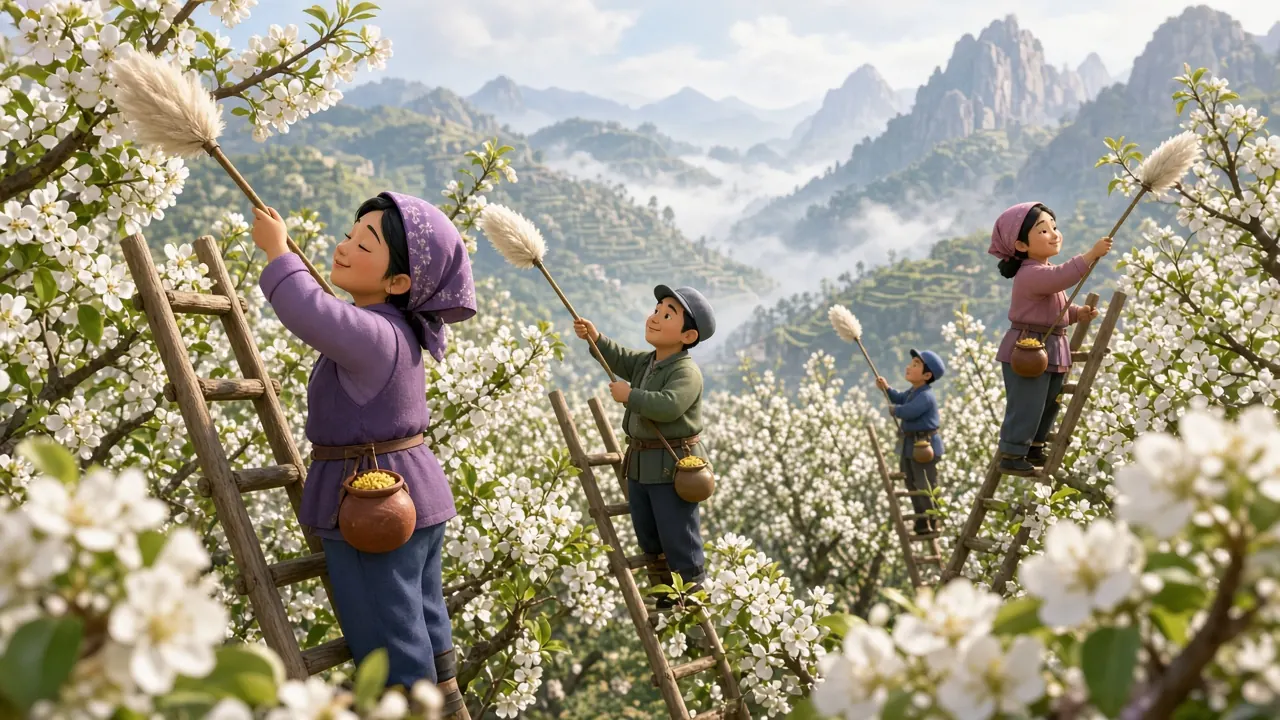
Here's where the strangest part of the story begins. In parts of Sichuan, China, where bees became scarce, farmers already pollinate apple and pear trees by hand. They use brushes made from chicken feathers and cigarette filters, and one person can do maybe five to ten trees a day. Now imagine every orchard on Earth.
Year 1: the supermarket shrinks
A year later, the supermarket looks strange. The bread, rice and pasta aisles are full. The fruit aisle is tiny and very expensive.
Scientists have actually modelled this. A 2015 study in The Lancet found that in a world with no animal pollinators, global fruit supplies would fall by about 23%, vegetables by 16%, and nuts and seeds by 22%. People would fill up on bread and rice instead, so the calories are fine but the vitamins are not. The study estimated about 1.4 million extra deaths every year, mostly from heart disease, stroke and other illnesses linked to eating less fruit and vegetables.
Even milk and meat get pricier. Cows eat alfalfa and clover, and growing their seed depends on bees. The fields regrow for a while, but new seed becomes rare. Altogether, the crops that need animal pollination are worth US$235–577 billion a year, according to the global biodiversity panel IPBES.
The museum of lost things
Some everyday things simply disappear:
- Honey: almost two million tonnes a year, gone. The jars in your cupboard become treasure.
- Silk: about 90,000 tonnes a year, spun by silkworms, gone.
- Shellac: the shiny coating on some sweets and pills, made by tiny lac bugs, gone.
- Carmine: the red in some yogurts, sweets and lipsticks, made from crushed cochineal bugs. It takes about 70,000 of them for a pound of dye. Gone.
The silver lining: malaria ends
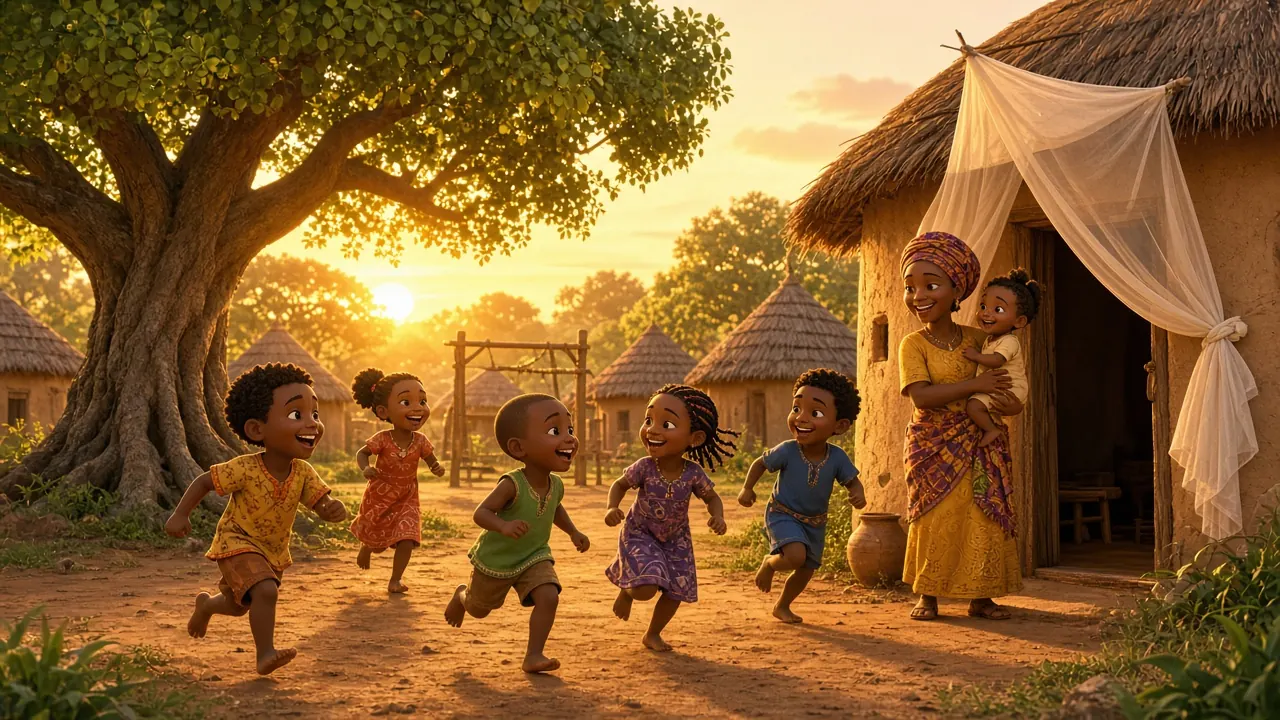
There's one huge silver lining. In 2024, malaria caused about 280 million cases and killed around 600,000 people, mostly young children in Africa. Malaria spreads only through mosquitoes, so no mosquitoes means no new infections. Treat the people who are already sick, and one of humanity's oldest killers is finished.
Dengue, Zika, yellow fever and sleeping sickness go with it. Ticks are still here, though, because they're not insects, so Lyme disease stays. Locust swarms and aphids are gone too. But around two billion people who eat insects as everyday food have just lost one.
10 years: the fading meadow
Ten years in, the countryside looks different, and not just because the buzz is missing. Many wildflowers that live only a year or two needed insects to make seeds. No seeds means no next generation, and meadow by meadow, they fade away.
Long-lived plants, such as many trees, hang on. They still flower every spring, but hardly any young ones grow up to replace them. The winners are plants that use the wind (grasses, pines, oaks and birches) plus anything that can pollinate itself. The world gets greener and browner, with much less red, purple and gold.
Underground, things change too. Ants and termites are some of the planet's busiest soil movers, especially in dry places where earthworms are rare. Without their tunnels, those soils pack down and nutrients recycle much more slowly. The food web keeps sliding: insect-eating birds, frogs, lizards and bats decline steeply, and the herons, hawks and snakes that ate them follow.
Humans adapt. Greenhouse growers already shake tomato flowers with buzzing wands. Byte has decided that counts as a career.
100 years: a windy world
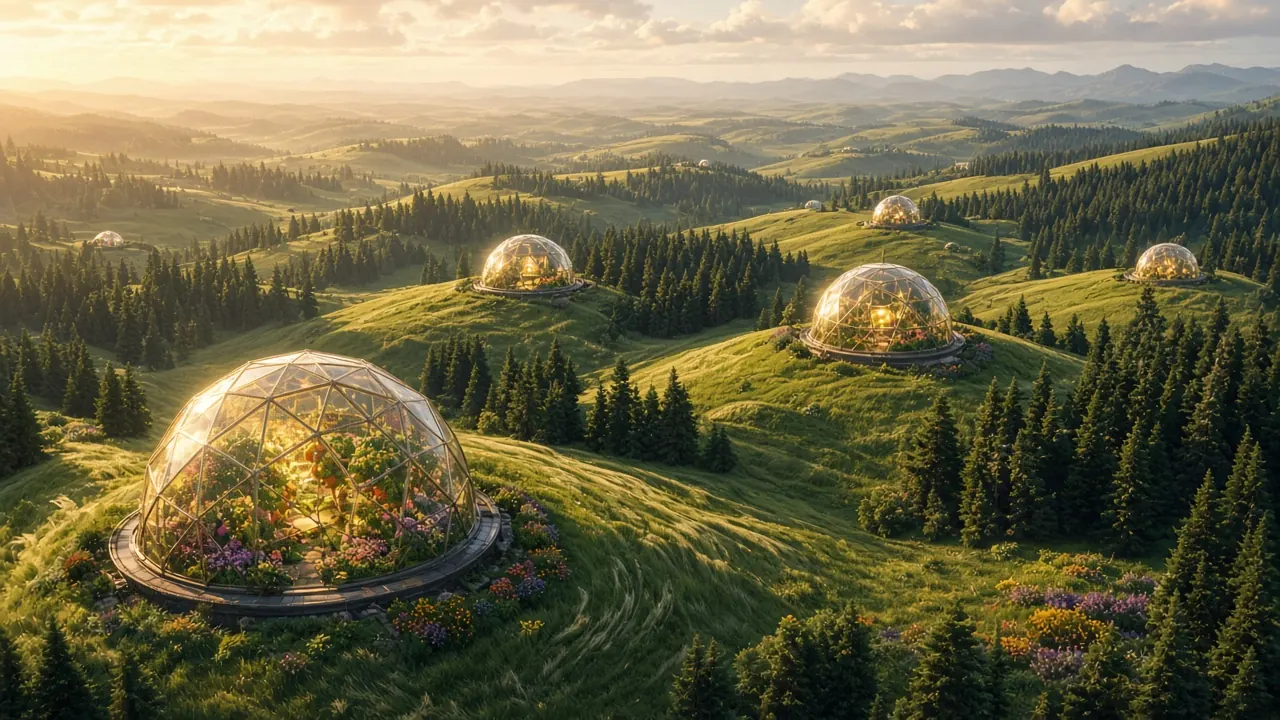
A century later, much of the land is grass and conifer forest, shaped by the wind. Many flowering plants still exist, but mostly in human hands. In greenhouses, botanical gardens and seed banks, people keep them alive flower by flower.
Hand-pollinator has become a serious profession: skilled, important and done with a feather on a stick, everywhere. Bread, rice and potatoes fill the plates, and fresh fruit is a treat for special occasions. A bowl of strawberries makes a birthday present.
In classrooms, kids learn about malaria the way we learn about the plague: a disease from the old days, carried by a strange, whining creature called a mosquito. They think it sounds made up.
1 million years: who fills the gap?
Let's go really far: one million years. Nature hates an empty job, but it isn't fast. After past mass extinctions, it took around ten million years for the variety of life to fully recover. So in a million years we're only seeing the opening act.
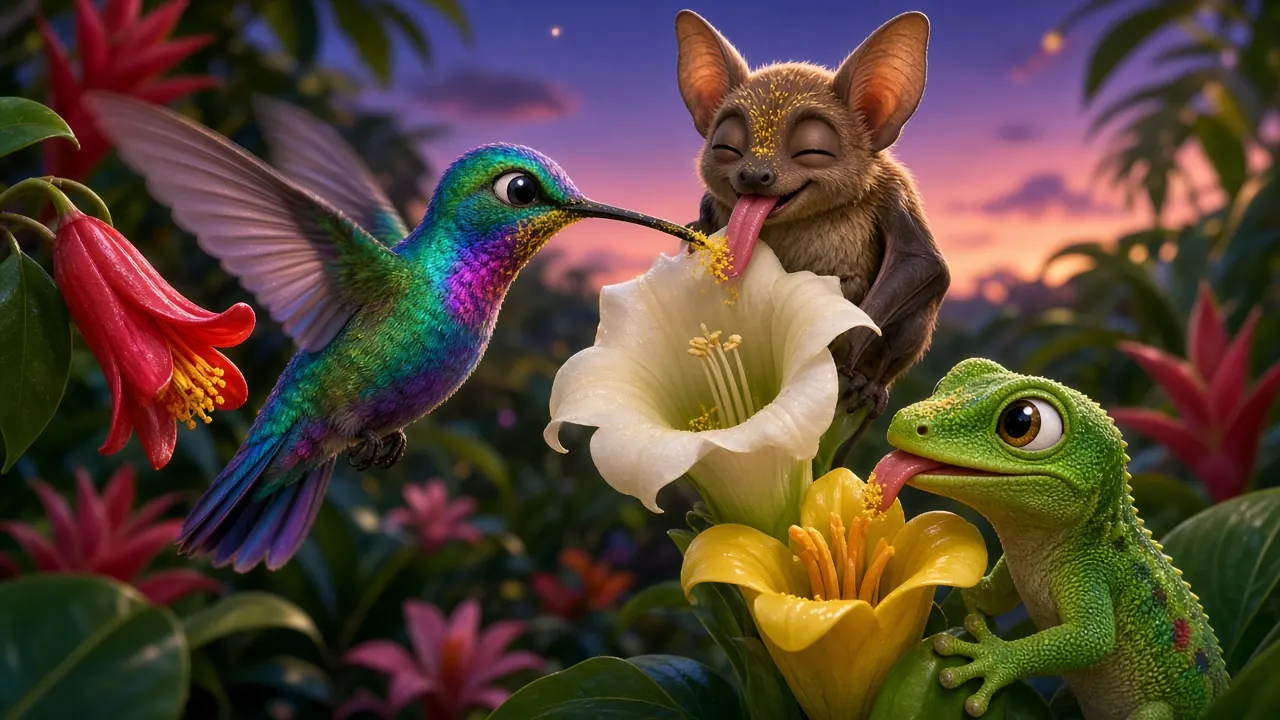
Some candidates are already practising. Hummingbirds and nectar bats pollinate flowers today, and on some islands even lizards do. Given time, birds and bats could take over more of the flower business. The insects' cousins could move into the empty spaces too. Spiders, mites, woodlice and millipedes all survived, and their descendants might evolve into new roles we can only guess at.
But here's the humbling part. Insects had been around for more than 400 million years. Flowers showed up only around 130 million years ago, and the two grew up together. That partnership took ages to build, and it won't be rebuilt in a hurry.
What it really means
Let's go back to that summer evening. In one minute, ten quintillion insects vanished. In an hour, the flowers waited. In a day, the nests went hungry. In a week, the clean-up stopped. In a month, the orchards failed. And in a year, fruit became a luxury, and malaria began to disappear.
We spend our lives swatting insects. But they were the delivery drivers, the cleaners, the recyclers and the dinner for half the animals we love. Humanity would survive, and thanks to the wind we'd still eat. But we'd live in a quieter, browner and blander world. We wouldn't lose our lives. We'd lose the colour.
Your turn: which would you miss most, chocolate, honey or apples? Or are you just happy the mosquitoes are gone? Tell us in the YouTube comments.
Frequently asked questions
Would humans go extinct if all insects disappeared?
No. Wheat, rice and corn are pollinated by the wind or pollinate themselves, and those three grains supply around half of the calories people eat. Humanity would survive, but with far less fruit, vegetables and nuts, and with serious health costs.
Did Einstein really say humans would last four years without bees?
There is no evidence he ever said it. The earliest known four-year version appeared in a French magazine in 1965, ten years after Einstein died, and the claim itself is wrong because the most important staple crops do not need bees.
Which foods would we lose without insects?
About three out of four leading food crops do better with animal pollinators, including almonds, apples, cherries, blueberries, melons, pumpkins, watermelons and cocoa. A 2015 study in The Lancet estimated that losing all animal pollinators would cut global fruit supplies by about 23%, vegetables by 16% and nuts and seeds by 22%.
Would chocolate disappear without insects?
Very nearly. Cocoa flowers are pollinated mostly by tiny midges, flies smaller than a pinhead. Without them, cocoa harvests would collapse and chocolate would become rare and very expensive.
Are spiders and ticks insects?
No. Spiders, mites and ticks are arachnids with eight legs. Crabs, shrimp and woodlice are crustaceans, millipedes are myriapods and earthworms are annelids. Insects have six legs and a three-part body, so in this thought experiment only they vanish, which is why Lyme disease from ticks would remain.
Would malaria disappear if mosquitoes vanished?
Malaria spreads through mosquitoes, so new infections would stop, and treating people who are already sick could end it. In 2024 malaria caused about 280 million cases and around 600,000 deaths. Dengue, Zika, yellow fever and sleeping sickness, which are also spread by insects, would go too.
How many insects are there on Earth?
Scientists estimate around ten quintillion (10 to the power of 19) insects are alive at any moment, more than a billion for every person. There may be around 5.5 million insect species, but only about one million have been named.
New "What If?" videos with Tik & Byte.